I’ve been producing events for over fourteen years. In that time, I’ve seen the industry go from “put a camera in the back of the room” to fully immersive hybrid experiences that would have seemed like science fiction when we started. And honestly? The pace of change right now is faster than anything I’ve experienced.
After COVID forced the entire events industry online practically overnight, a lot of people predicted we’d snap back to purely in-person events as soon as restrictions lifted. That didn’t happen. What happened instead was more interesting — companies discovered that hybrid formats gave them reach, data, and flexibility they didn’t want to give up. So instead of going back, the industry moved forward into something new.
Here’s what I’m seeing from our work with clients across India, and where I think this is all heading.
AI Is Changing Events Faster Than Most People Realise
I’ll be honest — when people first started talking about AI in events, I was sceptical. It sounded like a buzzword being slapped onto things that didn’t need it. But over the past year, the practical applications have become genuinely impressive.
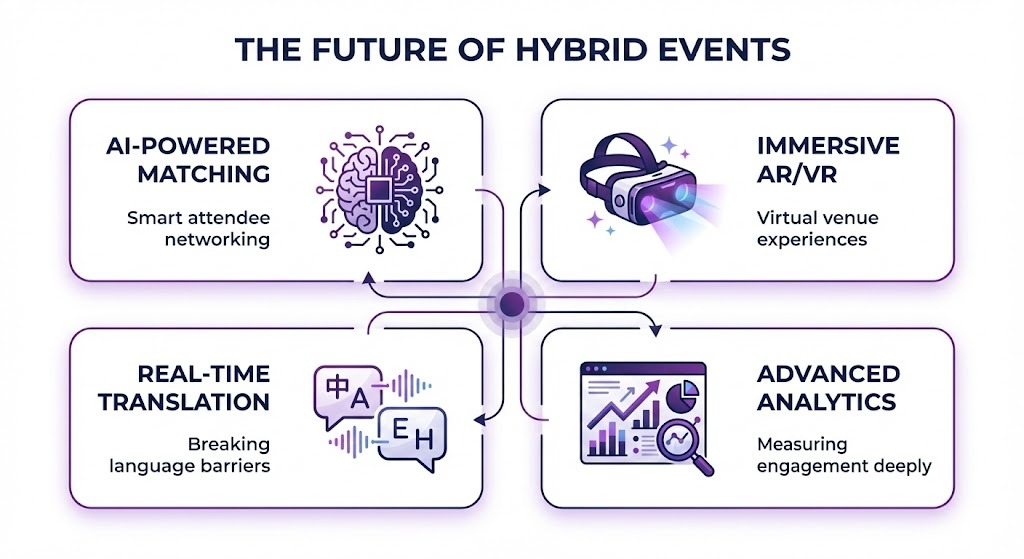
AI-powered matchmaking is solving one of hybrid events’ oldest problems: how do you help the right people find each other? At large conferences, attendees can’t possibly meet everyone relevant. AI analyses attendee profiles, stated interests, and even real-time behaviour (which sessions they attend, which booths they visit) to suggest connections. We’ve seen networking sessions where AI-matched participants report significantly more productive conversations than random or self-selected networking.
Real-time translation is a game-changer for India specifically. We did a hybrid event recently where the keynote was in English, but we had attendees dialling in from across the country. AI-generated subtitles in Hindi, Tamil, Telugu, and Kannada — in real time. Not perfect, but remarkably good. A year ago, this would have required a team of human interpreters and separate audio channels. Now it’s a software layer.
Automated content creation is where I’m most excited. AI can now generate highlight reels from a multi-hour event within minutes of the event ending. It identifies key moments — audience applause, speaker emphasis, visual reveals — and assembles a coherent recap. Our team still reviews and polishes the output, but what used to take a full day of editing now takes a couple of hours of refinement. That means we can get highlight content to clients and their social teams the same evening.
Intelligent Q&A moderation helps manage the flood of questions at large hybrid events. AI clusters similar questions, identifies the most-asked topics, and helps moderators prioritise. This means the Q&A session actually addresses what the audience cares about, not just whoever typed fastest.
Immersive Technology Is Getting Practical
For years, “immersive technology” at events meant someone in a corner with a VR headset that nobody wanted to queue for. That’s changing.
AR overlays are becoming genuinely useful rather than gimmicky. Imagine attending a product launch where you can point your phone at the product and see it disassembled, with each component labelled and explained. Or a property showcase where you can see a building’s planned renovations overlaid on the current structure. We’re moving from “AR as novelty” to “AR as information delivery.”
Spatial audio is transforming virtual event experiences. Instead of everyone in a flat video call, virtual attendees can move through a space where audio changes based on who they’re near — just like walking through a physical networking area. It sounds like a small thing, but it makes virtual networking feel dramatically more natural. Several platforms are building this in, and the difference in engagement is noticeable.
Virtual venue tours are bridging the gap for remote attendees. For hybrid events where the physical venue is part of the experience — think heritage properties, unique locations, branded environments — 360-degree venue captures let remote attendees feel present in the space rather than watching through a flat camera feed.
The key shift I’m seeing: immersive technology is moving from “impressive demo” to “solves a real problem.” That’s when technology adoption actually accelerates.
Sustainability Isn’t Just a Buzzword Anymore
Three years ago, sustainability at events meant putting out recycling bins and hoping for the best. Now it’s becoming a genuine planning priority, driven partly by corporate ESG requirements and partly by attendees who actually care.
Carbon tracking is becoming standard for large corporate events. Platforms now calculate the carbon footprint of your event — travel emissions, energy usage, waste — and provide reports. For companies with ESG commitments, this data isn’t optional. We’ve started including carbon impact assessments in our event proposals, and the response from corporate clients has been overwhelmingly positive.
Reduced travel is the biggest sustainability win of hybrid formats. When half your audience can attend virtually, the flight emissions drop dramatically. We had a client calculate that their hybrid annual conference produced roughly 60% less carbon than the equivalent fully in-person event. When you multiply that across every company doing the same thing, the impact is significant.
Digital swag is replacing the branded tote bags full of items that end up in landfills. Digital gift cards, premium content access, charitable donations in the attendee’s name, exclusive digital resources. Our clients are finding that attendees often prefer these to physical merchandise. And the cost saving is real — no printing, no shipping, no storage, no waste.
I’ll admit: when sustainability first came up in event planning conversations, I thought it was a box-ticking exercise. I was wrong. It’s now influencing venue selection, catering choices, production design, and format decisions in meaningful ways. Companies that ignore it are increasingly losing bids to companies that don’t.
Data and Personalisation
This is where hybrid events have an enormous advantage over purely physical ones, and most companies aren’t exploiting it yet.
Attendee journey mapping tracks how each person experiences your event — which sessions they attend, how long they stay, what content they engage with, who they connect with. Physical events give you registration data and maybe a post-event survey. Hybrid events give you a rich behavioural dataset.
Smart companies are using this data to personalise follow-up. Instead of sending every attendee the same “thanks for attending” email, they’re sending targeted content based on what each person actually engaged with. Attended the AI session? Here’s a whitepaper on AI implementation. Spent time at the cloud vendor’s booth? Here’s a meeting link with their solutions team. The conversion rates on personalised follow-up versus generic follow-up aren’t even close.
Personalised agendas are becoming expected at larger events. Rather than handing every attendee the same schedule, AI analyses their role, interests, and past behaviour to recommend a personalised track. “Based on your profile, we recommend these five sessions and think you should meet these three people.” It feels like a concierge service rather than a conference.
Real-time engagement analytics let event producers adapt on the fly. If data shows that attendees are dropping off during a particular session, you can adjust — shorten it, add interaction, shift the energy. If a breakout room is overcrowded and another is empty, you can rebalance. This responsiveness was impossible with physical-only events.
The “Phygital” Experience
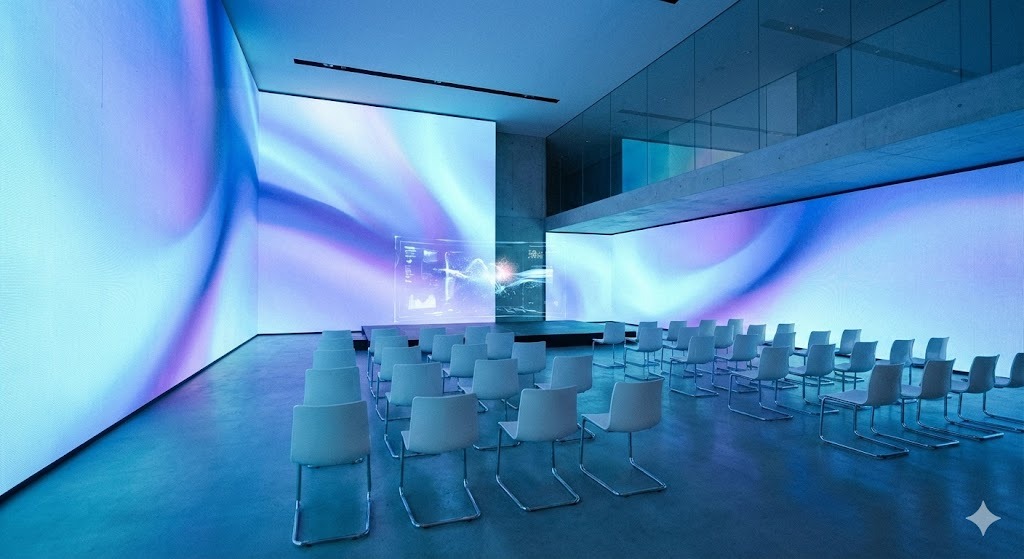
I’m not in love with the word “phygital” — it sounds like something a marketing team came up with at 2 AM. But the concept behind it is genuinely important: the boundary between physical and digital experiences is blurring, and the best events are designing for both simultaneously rather than treating them as separate channels.
What does this look like in practice?
A physical attendee scans a QR code at a booth and gets an AR experience on their phone, while a virtual attendee accesses the same experience from their browser. Same content, different delivery — both feel native to their context.
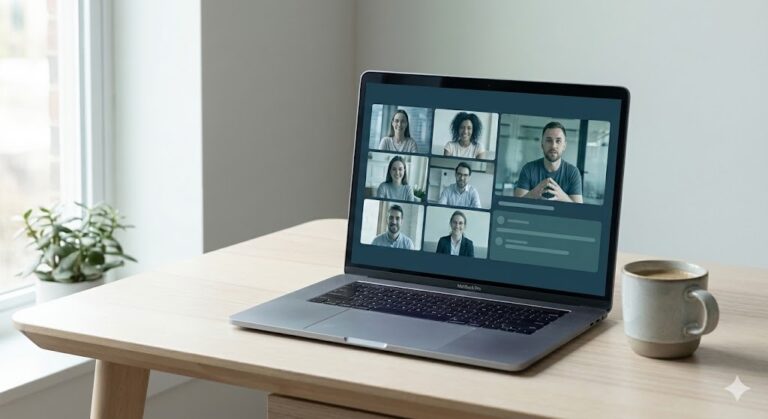
A virtual attendee asks a question that appears on the physical stage screen, and the speaker responds. The physical audience sees this happen in real time. The virtual attendee feels heard. Neither audience is secondary.
Networking that works across the divide — a physical attendee and a virtual attendee meeting through the event’s matchmaking system, having a video conversation facilitated by the platform, and exchanging contacts. Not a perfect substitute for shaking hands, but far better than the virtual audience being invisible to the physical one.
The events that get this right feel seamless. The ones that get it wrong feel like two separate events awkwardly stapled together. The difference is usually in the planning — designing for both audiences from day one, not bolting on a virtual component as an afterthought.
Regional Language Support: Critical for India
This is something that doesn’t come up enough in global trend pieces about hybrid events, but for India, it’s arguably the most important trend of all.
India has 22 officially recognised languages and hundreds of dialects. Most corporate events run in English. That works for senior management in metro cities. It doesn’t work for sales teams in tier-2 and tier-3 cities, factory floor workers, dealers in regional markets, or customers across the country’s incredibly diverse linguistic landscape.
Hybrid technology is making multilingual events practical in ways that weren’t possible before. Real-time AI translation, multiple audio tracks, translated captions, and multilingual chat moderation mean you can run a single event that’s genuinely accessible to a Hindi-speaking dealer in Lucknow and a Tamil-speaking manager in Coimbatore simultaneously.
We’re seeing this become a competitive advantage for companies that invest in it. One of our clients — a consumer electronics brand — switched their annual dealer meet from English-only to a multilingual hybrid format. Attendance from non-metro markets increased substantially. Engagement metrics went up across the board. Their regional teams felt included rather than like they were struggling to follow along.
The technology isn’t perfect yet. AI translation makes mistakes, especially with technical terminology and industry jargon. But it’s improving rapidly, and a slightly imperfect translation in someone’s native language beats a perfect presentation in a language they’re not fully comfortable in.
What I’m Predicting
Predictions are dangerous — I’ve been wrong before and I’ll be wrong again. But based on the conversations I’m having with clients and the direction the technology is moving, here’s where I think we’re heading over the next two to three years.
Hybrid becomes the default, not the exception. We’re already seeing this. The question from clients used to be “should we make this hybrid?” Now it’s “how should we make this hybrid?” The cost of adding a virtual component has dropped enough that it’s hard to justify not doing it.
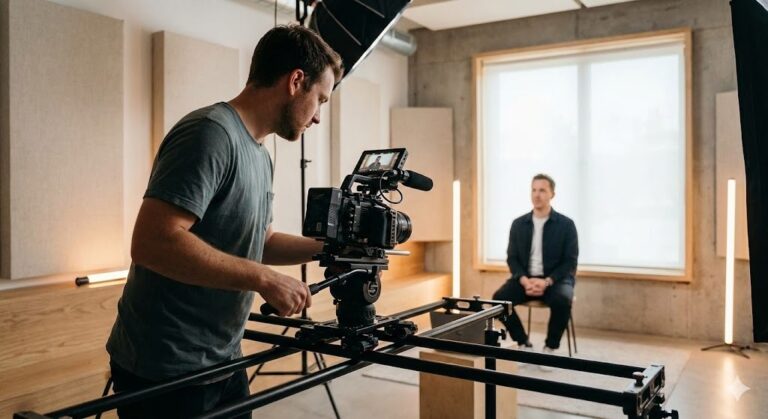
Production quality expectations will keep rising. Audiences have been spoiled by Netflix and YouTube. They won’t tolerate poor video, bad audio, or amateurish graphics. The gap between “professional event production” and “someone’s laptop with a webcam” is widening, and companies that try to cut corners on production are going to lose virtual audiences fast.
Events become data products. The data generated by hybrid events — attendee behaviour, engagement patterns, content performance — will become as valuable as the event itself. Companies will choose event formats and platforms based partly on the data they generate.
Smaller, more frequent, more targeted. Instead of one massive annual conference, companies will run more frequent, focused hybrid events for specific audiences. The economics of hybrid make this viable — you don’t need to fly everyone to one city four times a year if half the audience can attend virtually.
The production partner becomes essential. As hybrid events grow more complex — AI integration, immersive technology, multilingual support, data analytics — the need for experienced production partners increases. This isn’t something most companies can manage with internal teams.
I’m genuinely excited about where this industry is going. After fourteen years of producing events, the tools available today would have been unimaginable when we started. And we’re still early.
Let’s Build What’s Next
If you’re planning a hybrid event and want to incorporate some of these trends — or if you’re just curious about what’s possible — we’d love to chat. No pitch, no pressure. Just an honest conversation about what makes sense for your specific situation.
Get in touch: +91 96635 06306 or sales@thalsamaya.com.